Fabian Ljung
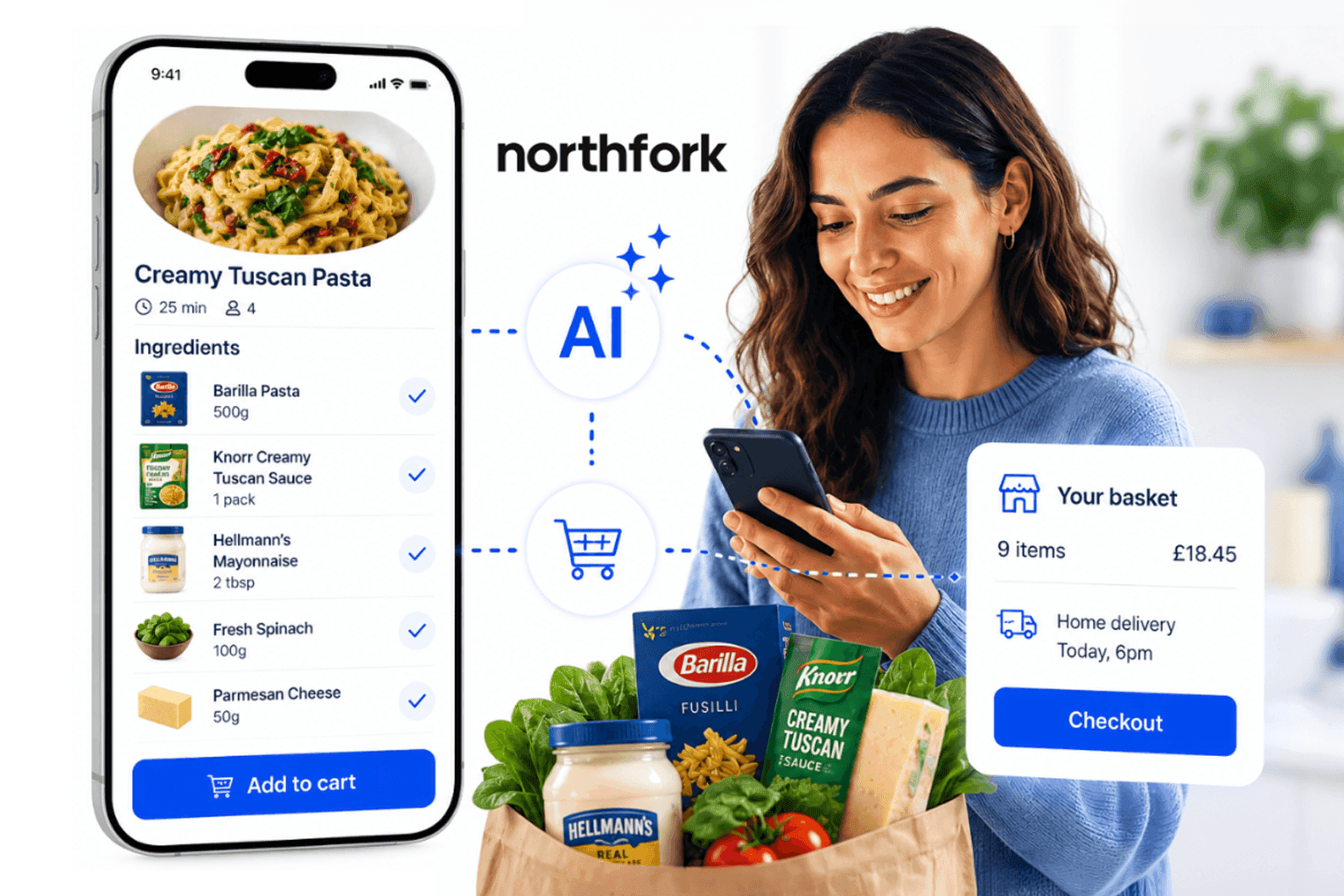
AI is changing how consumers discover, evaluate and buy products. While conferences are full of predictions about Agentic Commerce, few are explaining what it actually means for food brands and grocers, or what they should do about it today. This article explores how AI-powered shopping will reshape brand choice and the practical steps organisations can take today to remain recommendable, discoverable and shoppable in an agent-driven future.
Everyone Is talking About AI and Agentic Commerce. Nobody Is Explaining What Brands Need to Do to Win.
If you attended ShopTalk, NRF, Digital FMCG or almost any major commerce conference this year, you'll have heard the same message:
"AI is going to change how consumers shop."
The problem is that very few people are explaining what that actually means for brands, or what they should do about it today.
As a result, many brand leaders are left with more questions than answers.
How will AI decide which products to recommend?
Will consumers' brand preference still matter?
What happens when consumers stop searching and start delegating?
And what should brands be doing today to prepare?
These are not theoretical questions. They sit at the heart of how consumers discover products, how brands grow market share and how retailers capture demand.
The good news is that the future is becoming clearer. While nobody knows exactly how quickly AI-powered shopping will evolve, we can already see the foundations emerging.
And for brands that prepare early, the opportunity is significant.
What Happens When Consumers Stop Searching and Start Delegating?
Historically, grocery shopping has been a journey of discovery.
A consumer might see a recipe on Instagram, watch a creator, browse a retailer website, compare products, visit a store and eventually decide what to buy.
Every step creates an opportunity for a brand to influence the final purchase decision.
Advertising influences awareness.
Content influences consideration.
Packaging influences selection.
Retail media influences conversion.
The entire ecosystem is designed around helping consumers evaluate options and make decisions.
Agentic commerce changes the process.
Imagine a parent finishes work on a Tuesday evening and asks an AI assistant: "Plan five healthy family dinners for next week. Keep the budget below £100 and shop at the best-value retailer."
Within seconds, the AI creates a meal plan, selects recipes, chooses products, builds a basket, selects a retailer and suggests a delivery slot.
The consumer doesn't search for products, they define the outcome they want. The AI handles the execution.
This is perhaps the most important shift for brands to understand.
The consumer chooses the outcome. The AI increasingly chooses the products. And that raises a critical question.
How does your product become the one the AI recommends?
The New Battleground for Brands: Recommendation
For decades, brands have competed for visibility. Tomorrow, they will increasingly compete for recommendation. Imagine a consumer asks:
"Help me eat more protein this month."
Or:
"Plan healthy lunchboxes for my children."
Or:
"Create a shopping list for a BBQ this weekend."
The AI isn't choosing products because it likes one logo more than another. It is evaluating which products best satisfy the request.
That decision may be influenced by:
Price
Nutrition
Availability
Promotions
Dietary suitability
Sustainability attributes
Household preferences
Previous purchases
Retailer inventory
Brand preferences
The critical point is that AI can only recommend what it understands and this is where many brands face a hidden challenge.
Most brand content was built for people, not machines.
Most Brands Are Rich in Content but Poor in Structure
Food brands already possess enormous amounts of valuable content.
Recipes.
Product information.
Nutrition data.
Cooking instructions.
Hints and Tips.
Usage occasions.
Meal plans.
Promotional videos and content.
The challenge isn't a lack of content. The challenge is structure.
Consider a simple recipe. A marketer might know that it is:
Family-friendly
High-protein
Budget-conscious
Suitable for meal prep
Ideal for back-to-school season
But unless that information is clearly structured, reliable and accessible, an AI agent may never understand those relationships.
Now imagine two competing brands.
Both have excellent products.
Both have hundreds of recipes.
Both have rich nutritional information.
One has structured and accessible content that AI systems can easily understand. The other does not. Which brand is more likely to be recommended?
This is why agentic commerce is not simply a technology story. It is a content and data story.
In an AI-driven future, content is no longer enough:
Content needs context.
The Brands That Win Will Be the Brands AI Understands
Much of the conversation around AI focuses on consumer behaviour. A more important question may be, "What information is available to the AI when it makes a recommendation?"
Historically, marketers focused on making content compelling for people. Increasingly, they must also make content understandable for machines.
This means helping AI systems understand:
What a product is
Who it is relevant for
What problem it solves
Which occasions it fits
Which dietary needs it supports
Which recipes it complements
When it should be recommended
The brands that succeed won't necessarily have the biggest budgets, they will be the brands that are easiest for AI systems to understand and confidently recommend.
In many ways, this is similar to what happened with search engines twenty years ago. Brands that invested in being discoverable online gained a significant advantage.
Today, the same opportunity exists for AI-driven discovery.
Why Preparation Starts Today
Many organisations understandably view agentic commerce as a future challenge.
Teams are busy.
Budgets are limited.
Priorities are immediate.
Preparing for a future AI-driven shopping experience can feel difficult to justify.
But here's the important point: The work required to prepare for agentic commerce creates value immediately.
The same structured content that helps AI agents understand products also improves:
Website search
Product discovery
Personalisation
Recipe recommendations
Ecommerce experiences
CMS effectiveness
Retail media performance
It also creates entirely new opportunities for brands to build intelligent, engaging experiences:
Intelligent meal planners.
Personalised nutrition assistants.
Cooking companions.
Digital brand ambassadors.
Consumer-facing AI experiences.
Preparing for AI isn't a future investment.
It's increasingly becoming a digital commerce investment that starts paying back today.
What Brands Should Actually Do
When we speak with brands, the same question comes up repeatedly:
"This all sounds interesting. What should we actually do?"
The answer can be simplified into three priorities.
Make Your Content Understandable to AI
Before AI can recommend your products, it needs to understand them.
This requires enriching product, recipe and content assets with structured metadata that explains:
What the content is
Who it is relevant for
When it should be recommended
What consumer need it solves
This is where many brands have work to do.
The good news is that modern AI tools, like Northfork’s proprietary, deterministic AI engine can automate much of this process and our experienced data teams quickly complete the detail with our own in-house systems.
Make Your Content Accessible
Once content has been enriched, it needs to be available wherever decisions are being made.
That means exposing structured content through APIs and infrastructure that can be accessed by:
Websites
Apps
Retailers
CMS platforms
Search experiences
Future AI agents
Having structured content locked inside a content repository is not enough, it needs to be accessible.
Make Recommendations Shoppable
Being recommended is only valuable if consumers can act on that recommendation. This is where commerce infrastructure becomes critical.
AI agents need a way to move seamlessly from recommendation to transaction. They need to:
Identify products
Build baskets
Select retailers
Check availability
Complete purchases
More than simply being discoverable, the future winners will be both discoverable and purchasable.
Why Northfork Is Uniquely Positioned to Help
Many companies are talking about agentic commerce yet few are building the infrastructure required to support it.
Northfork sits at the intersection of three capabilities that agentic shopping will require.
Deep Food Intelligence
Northfork understands food, recipes, ingredients, nutrition and shopping behaviour.
This enables brands to analyse, classify and enrich content in ways that are highly relevant to future AI recommendations.
Structured and Accessible Content
Northfork helps transform content into structured, machine-readable data that can be distributed across websites, commerce experiences, CMS platforms and future AI ecosystems.
Global Retailer Connectivity
Northfork already connects brands, content and products to retailers across multiple markets. This means recommendations can be connected directly to baskets and checkout experiences.
In many ways, Northfork provides the infrastructure layer that connects inspiration, recommendation and transaction.
Much like Stripe became a critical infrastructure layer for online payments, Northfork is building the infrastructure required to make food content, products and commerce accessible to the next generation of shopping experiences.
The Opportunity Ahead
Much of the discussion around AI focuses on what brands might lose but a more useful question is what brands stand to gain.
The brands that succeed in agentic commerce will not necessarily be the ones with the largest media budgets or the most impressions.
They will be the brands that are easiest for AI systems to understand, recommend and purchase.
For years, digital marketing has been about helping consumers find products, the next chapter will be about helping AI agents choose them and the good news is that the foundations can be built today.
The organisations that start now will be in the strongest position to benefit as agentic commerce moves from industry discussion to consumer reality.
How AI-Ready Is Your Brand?
Most organisations have no clear view of how well their products, content and commerce infrastructure can be understood by AI systems.
Northfork helps leading food brands, retailers and publishers prepare for the future of agentic commerce by making content AI-ready, exposing it through modern infrastructure and connecting recommendations directly to retailer checkout.
If you'd like to understand how ready your brand is for AI-powered shopping, we'd be happy to run a quick audit of your data and recommend the best approach.
More articles
When AI Does the Shopping, How Does Your Brand Get Chosen?
AI is changing how consumers discover, evaluate and buy products. While conferences are full of predictions about Agentic Commerce, few are explaining what it actually means for food brands and retailers, or what they should do about it today. This article explores how AI-powered shopping will reshape brand choice and the practical steps organisations can take today to remain recommendable, discoverable and shoppable in an agent-driven future.
Read article

From Love Island to Walmart Cart: How NBCUniversal Turned Love Island USA into a Shoppable Walmart Experience
Entertainment has become one of the world's most influential shopping channels. When viewers discover products they love, they increasingly expect to buy them instantly rather than search for them later. This case study examines how NBCUniversal used Northfork's commerce infrastructure to connect Love Island with Walmart and Megan Thee Stallion's Hot Girl Swim collection, turning audience inspiration into a frictionless, measurable shopping experience.
Read article

The Living Room: the New Storefront
Amazon isn’t just adding ads to TV. They’re turning TV into a clickable, measurable, shoppable surface.
Read article