Erik Wallin

Every year, across the world, we waste 1.3 billion tonnes of food. In this age of rapidly increasing awareness about our impact on the planet, food waste is under the spotlight. So, what can we do to reduce it?
Understanding food waste
We waste food in many ways. Food lost in agriculture is one problem. It varies from country to country. According to the 2021 G20 Food Sustainability Index, loss ranges from 10.11% of all food produced in Saudi Arabia to 1.56% in Russia.
Food waste is also an issue in the hospitality sector. A Reconomy study found that restaurants account for 22% of the sector's food waste, pubs for 19% and hotels for 9%.
Supermarkets also play their part. Again, this varies by country. UK supermarkets, for example, account for just 2.9% of the country's total food waste. In Egypt, however, 20% of all supermarket produce is wasted due to storage issues.
Then there is household waste. The average UK household throws away 1.96kg of food daily. That equates to emitting 25 million tonnes of CO2e per year.
What can we do?
Everyone can help reduce food waste. Food sharing apps are taking off around the world. These see food that would otherwise be wasted being sold cheaply at the last minute by supermarkets, coffee shops and restaurants.
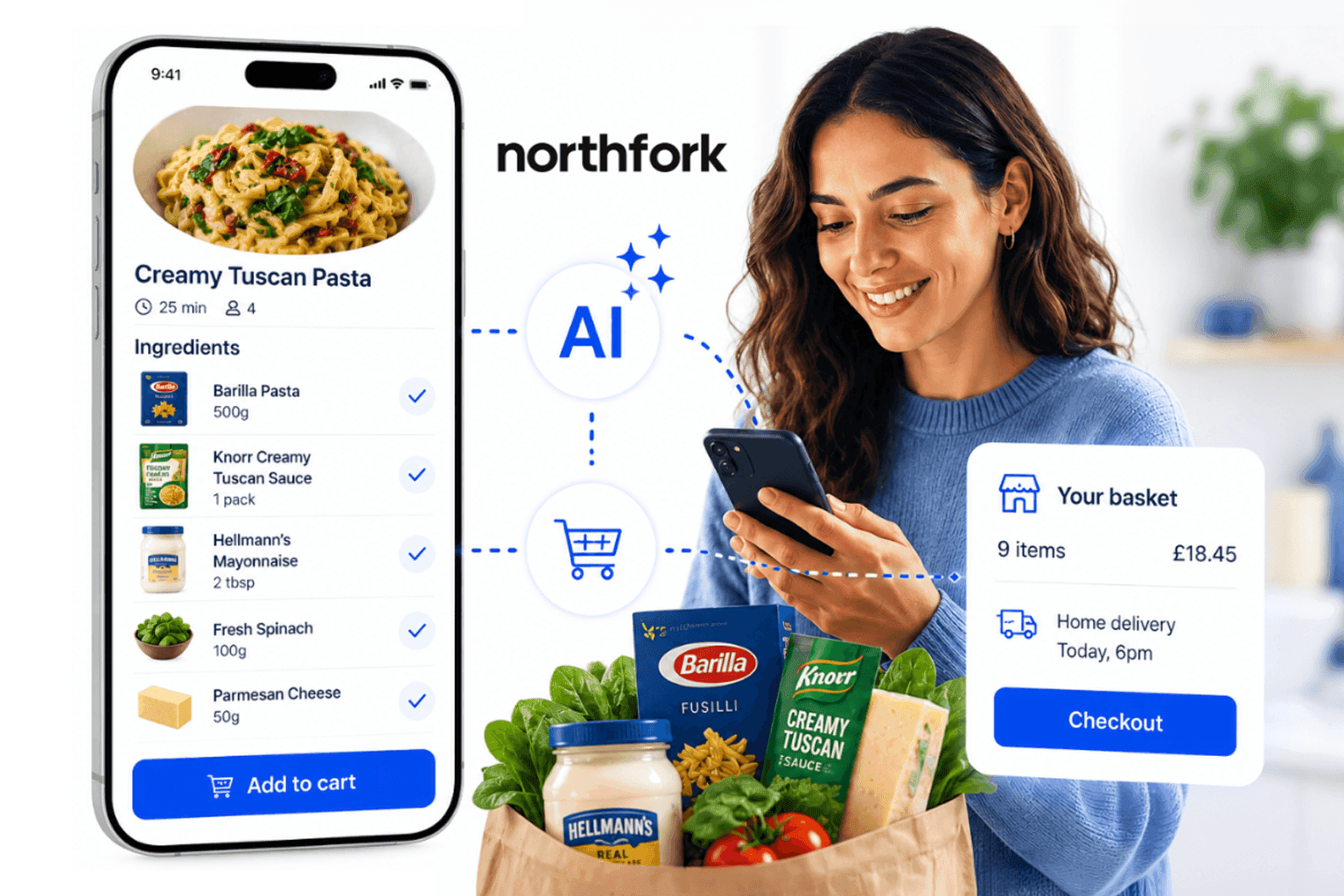
Recipe shopping is another tech-driven solution, as Erik Wallin, Co-founder of Northfork, explains:
"Recipe tech allows for recipe suggestions based on what's already in a shopper's basket. This means that leftover half-packets of things are built into the weekly meal plan. The result is that those buying groceries online can reduce the food their household is likely to waste every single week. So thinking about the meals that you can cook rather than the individual product will open up new possibilities. From that banana that's about to go brown or already has, make a cake or a smoothie! "
There are many other solutions. Wallin concludes:
"We have it in our power to reduce food waste hugely. Awareness is key to this, so let's raise our voices and work together."
More articles
When AI Does the Shopping, How Does Your Brand Get Chosen?
AI is changing how consumers discover, evaluate and buy products. While conferences are full of predictions about Agentic Commerce, few are explaining what it actually means for food brands and retailers, or what they should do about it today. This article explores how AI-powered shopping will reshape brand choice and the practical steps organisations can take today to remain recommendable, discoverable and shoppable in an agent-driven future.
Read article

From Love Island to Walmart Cart: How NBCUniversal Turned Love Island USA into a Shoppable Walmart Experience
Entertainment has become one of the world's most influential shopping channels. When viewers discover products they love, they increasingly expect to buy them instantly rather than search for them later. This case study examines how NBCUniversal used Northfork's commerce infrastructure to connect Love Island with Walmart and Megan Thee Stallion's Hot Girl Swim collection, turning audience inspiration into a frictionless, measurable shopping experience.
Read article

The Living Room: the New Storefront
Amazon isn’t just adding ads to TV. They’re turning TV into a clickable, measurable, shoppable surface.
Read article